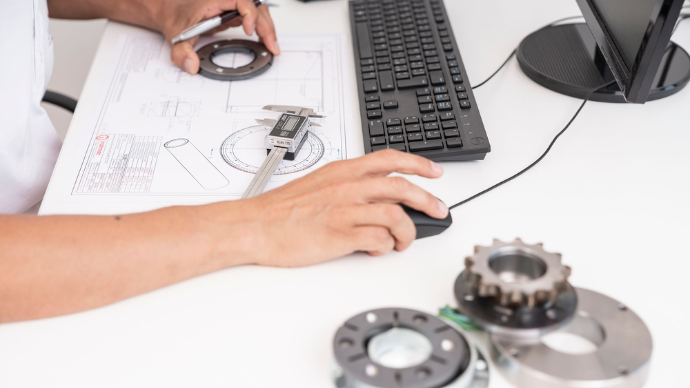
scrivania ufficio Indemac

Why hygiene and safety are crucial in industrial laundry

In professional settings such as hospitals, hotels, nursing homes, gyms, and sports facilities, laundry is not a secondary service—it is a strategic function. The quality of textile treatment directly impacts user well-being, the organization’s reputation, and compliance with regulations.

In healthcare and hospitality sectors, poor laundry management can lead to cross-contamination, healthcare-associated infections, complaints, or reputational damage. At the same time, neglecting worker safety means putting people and processes at risk, undermining overall productivity.

In a modern industrial laundry, hygiene and safety must be continuously planned, monitored, and improved. These are not abstract principles, but operational parameters that require expertise, technology, and a structured approach.

Regulations and reference standards

Industrial laundries serving third parties, healthcare facilities, hotels, or sports complexes must comply with a wide set of regulations covering both hygiene and operational safety.

Key regulatory references include:

  • Regulation (EC) 852/2004: on food hygiene, including requirements for textiles used in food service.
  • Directive 2006/42/EC (and subsequent updates): on machinery safety, relevant for both manufacturers and users.
  • UNI EN 14065: defines criteria for RABC (Risk Analysis and Biocontamination Control) systems in laundries, especially important for healthcare textiles.
  • ISO 45001: occupational health and safety management systems.
  • REACH and CLP regulations: on the safe use of chemical products in industrial processes.

In Italy, inspections may be conducted by ASL, NAS, and regional authorities, particularly for textiles from healthcare environments or biological risk zones. In this context, traceability, flow separation, machine maintenance, and staff training are essential requirements.

Best practices to ensure maximum hygiene

Achieving high hygiene standards in industrial laundry involves much more than using quality detergents or setting the right temperature. It begins with facility design, extends to work organization, and is supported by smart technology.

Cleaning and sanitizing equipment

Every machine, duct, and component that comes into contact with textiles must be kept clean. This is especially true for washers, dryers, ironers, and folders. Any buildup or microbial load can compromise the entire process.

Key practices include:

  • Running empty cycles at high temperature with sanitizing agents
  • Daily cleaning of filters and loading tanks
  • Regular washing of piping and drainage systems
  • Periodic swab tests for microbial control.

Thanks to integrated diagnostics and Industry 4.0 features, Indemac machines enable real-time monitoring of hygiene parameters, process visibility, and predictive maintenance planning.

Proper garment and workflow management

Logistics and garment handling are another critical factor. The separation between dirty and clean items must be physical, temporal, and organizational.

State-of-the-art laundries design their spaces with a unidirectional flow: soiled textiles enter through one area, are processed, and never cross paths with clean items. This rule applies to carts, containers, staff, and equipment.

Automated tools—such as feeders, folders, and internal transport systems—help minimize manual handling and reduce contamination risk.

Safety measures for operators

Laundry work involves fast-paced tasks, heavy loads, high temperatures, and moving parts. Safety cannot be left to chance.

Common risks include:

  • Lifting and moving bulky items
  • Burns from steam or hot surfaces
  • Getting caught in unprotected machinery
  • Allergic or chemical reactions to detergents and disinfectants

Effective preventive measures include:

  • Ergonomic loading/unloading systems
  • Trolley tipping systems to reduce manual effort
  • Proximity sensors and physical guards
  • Easily accessible emergency controls
  • Continuous training for staff

All Indemac machines comply with the strictest European safety standards and are designed to reduce operator strain. From workstation layout to digital controls, everything is engineered for smooth, safe, and compliant operations.

How Indemac helps customers manage hygiene and safety

Indemac is not just a supplier of machines: it is a technological and consulting partner for companies aiming to raise hygiene and safety standards in their laundry operations.

We offer an integrated system that combines hardware, software, and training. Solutions include:

  • Customized layout design based on regulatory flows
  • Machines with self-diagnostic systems and remote control
  • Mobile app for hygiene parameter monitoring and maintenance tracking
  • Technical and operational training for staff.

With our Industry 4.0 package, customers benefit from advanced features such as:

  • Automatic alerts in case of anomalies
  • Detailed reports with cycle and performance analysis
  • Intuitive dashboards showing machine status
  • Full traceability of processed garments and washing cycles.

These tools not only help prevent breakdowns and downtime—they also represent a clear competitive advantage in the eyes of clients and end users, who increasingly value transparency and service quality.

Recommendations for a hygienic and safe work environment

Building an efficient laundry system is not just about productivity—it’s a commitment to responsibility, quality, and competitiveness. Every organization—whether in healthcare, hospitality, or wellness—has a duty to ensure safe processes for people and hygienic treatment for textiles.

To achieve this, we recommend:

  • Choosing suppliers with industry-specific expertise
  • Investing in certified and advanced technologies
  • Designing spaces according to workflow logic
  • Continuously monitoring key hygiene and safety parameters
  • Involving and training all operating staff.

Indemac supports industrial laundries through every step of this journey, offering tailored solutions, hands-on training, and intelligent technologies. Whether you’re running a hospital laundry facility, a hotel, or a fitness center, our team is here to help you meet hygiene and safety challenges with confidence and foresight.

Need to optimize hygiene and regulatory compliance in your laundry?
Contact the Indemac team for personalized advice.

Accessorio lavanderia industriale ILC Indemac

Which accessories to choose to improve the efficiency of your industrial laundry

When we talk about industrial laundries, our minds immediately jump to the large machines: high-capacity washing machines, powerful dryers, professional ironers.
But the real step up in quality—the one that makes the difference between a laundry that works “well” and one that works at its full potential—often depends on much smaller components. Accessories.

These are not just “optional extras”: in fact, they are the key to customizing your setup based on the type of business, minimizing waste and downtime, and pushing automation to a new level.

A properly accessorized machine works better, lasts longer, and reduces operator fatigue. Most importantly: it delivers more.
In Indemac’s configurations, accessories are not treated as a list of optional extras, but as true strategic tools to increase the performance of every line.


The main accessories available for Indemac machines

Each machine has a specific mission and, consequently, a set of accessories designed to enhance its functions. The wide Indemac range allows you to configure each plant in a truly tailor-made way, combining the right technologies for each stage of the process.

For example, self-drying ironers can be equipped with automatic roll cooling systems, touch panels with self-diagnostic functions, vacuum feeding tables and, in high-productivity lines, automatic sheet feeders and motorized rear tables. These solutions ensure a seamless, uninterrupted workflow.

ILC compact lines, on the other hand, focus on efficiency with minimal space usage: the automatic feeder allows a single operator to handle even large items, while accessories like fold bypass, small item collectors or side stackers make it possible to manage production dynamically and flexibly, even in limited spaces.

Then there are washing machines, with accessories that make a difference in terms of sustainability and maintenance: such as the double drain system with water recovery or the tilting system that simplifies operator tasks. Or dryers, where the integration of the iDry sensor or FC System fire protection meets safety and energy-precision needs.

Every accessory is designed to work in perfect synergy with its machine, ensuring reliability, durability and performance. But accessory choice should never be standard. It must start from one essential question: who are you, and what do you do?

How to choose accessories based on your business

A laundry serving the hotel industry will not have the same needs as one serving healthcare facilities or offering third-party services to small artisan businesses. That’s why it’s essential to start not from the machines, but from the nature of your work.

  • Do you handle high volumes of bed linen? Then an automatic sheet feeder and vacuum feeding table are investments that will repay you in efficiency and saved time.
  • Do you work with small items like pillowcases, napkins, aprons? Multi-lane rear collectors will help you organize work better and reduce manual operations.

In the case of industrial folders, accessories like the third longitudinal fold or synchronized speed with the ironer can make all the difference for those managing continuous lines and needing consistent folding precision—even at fast speeds.
And then there’s a frequently overlooked aspect: flexibility. Some accessories—such as longitudinal fold bypass systems or side stackers—allow you to manage different workflows on the same line, adapting to ever-changing clients and workloads.

The operational and economic advantages of a complete setup

Equipping yourself with the right accessories means gaining a real competitive edge. And it’s not just about numbers—it’s about operational peace of mind.

A well-equipped machine reduces operator stress, minimizes human error, prevents unexpected downtime, and optimizes energy usage. In practical terms: lower operating costs and more consistent production.

Work organization also benefits from a complete configuration: automatic feeding, for example, allows one operator to manage multiple stations or reduces strain during smaller shifts. Blade or compact stackers allow for large-volume stacking without slowdowns, while separate collectors prevent confusion among finished items.

And economically? A tailored configuration delivers a much faster ROI. Because a plant working at its full potential across all stages—from washing to folding—lets you do more, better, and with fewer resources.

The value of a tailored investment

FInvesting in the right accessories isn’t a technical whim—it’s a strategic decision. Each optional feature you choose—when matched to your actual needs—becomes an integral part of your competitive edge.

That’s why Indemac designs every configuration in direct dialogue with the customer. Because the value of a laundry isn’t just measured in kilos washed or folded per hour, but in its ability to adapt, grow, and offer high-level service to the most demanding clients.
Our advice? Don’t just choose an accessory. Choose the setup that helps you work better.

Need help defining the ideal configuration for your laundry?
Contact the Indemac team and let’s design your tailor-made solution together.

la diagnostica automatica dei macchinari

How Indemac’s automatic diagnostics system works

In the industrial machinery sector, predictive maintenance and automatic diagnostics are essential tools to ensure operational continuity and reliability. In the world of industrial laundries in particular, operational continuity is a critical factor. Every machine downtime translates into delays, costs and reduced efficiency.

This is precisely where Indemac’s automatic diagnostics technology comes in: a strategic ally designed to provide users with a cutting-edge solution to prevent faults, optimize maintenance interventions and extend the useful life of machines.

Thanks to a smart system of sensors, 4.0 interconnection and APP-based management, it is now possible to anticipate failures, interpret machine status in real time and plan proactive interventions. A state-of-the-art technology designed to educate operators, simplify management and ensure maximum efficiency.

In this article, we explore how the system works and what tangible benefits it offers your business.


What is automatic diagnostics in industrial machinery

Automatic diagnostics is an integrated system that can detect potential malfunctions in advance by continuously analyzing vital parameters such as temperature, speed, pieces done and operating cycles.

This technology, increasingly used in advanced manufacturing sectors, is a cornerstone of predictive maintenance. The direction is clear: anticipate problems rather than react to them.

How Indemac’s advanced technology works

Indemac has developed its own advanced automatic diagnostics platform, fully integrated into a digital ecosystem designed specifically for industrial laundries.

Here is how it works:

  • Active monitoring: each machine is equipped with smart sensors that collect and transmit data in real time.
  • 4.0 interconnection: all data is centralized in a management system, also accessible via APP, allowing operators to control machines remotely and instantly.
  • Facilitated support: the diagnostics system allows technicians to intervene more quickly and precisely, minimizing operational disruption.

This technology is part of Indemac’s full 4.0 package, enabling companies to access tax incentives provided by Italian legislation for investments in innovation and digitalization.

Automatic diagnostics: the main benefits for users

Implementing automatic diagnostics on Indemac machines means turning a potential cost into a real competitive advantage.

  • Fault prevention
    Early detection of anomalies helps avoid machine stops and sudden breakdowns, drastically reducing unexpected costs.
  • Optimized maintenance response times
    Real-time alerts and intuitive dashboards, accessible even remotely, enable technicians to intervene faster and more accurately
  • Extended machine lifespan
    Timely maintenance leads to longer machine life, safeguarding your investment over time
  • Greater operational efficiency
    With  the 4.0 package, users gain a complete overview of machine status and workflow, improving scheduling and reducing waste.

How to read and interpret diagnostics data

One of the greatest strengths of Indemac’s automatic diagnostics is its user-friendliness. The interface is designed to be intuitive and accessible, even for those without advanced technical skills. This means that even less experienced operators can monitor the machine’s status independently, without always needing a technician.

  • Graphical dashboards with immediate visual indicators
    The dashboards provide a visual overview of operating parameters: colors, symbols and clear alerts help identify any anomalies at a glance.
  • Automatic notifications via APP or control panel
    Notifications, whether sent to the APP or displayed on the built-in panel, alert operators in real time when performance deviates from optimal values.
  • Performance reports with historical trends and suggestions
    Indemac’s dashboards organize all data clearly, highlighting long-term trends and recommending preventive maintenance actions.

All of this increases operator engagement and makes them an active part of machine management. It’s an approach that not only improves day-to-day maintenance, but also strengthens a culture of efficiency and shared responsibility within the company—while helping reduce operating costs.

A strategic investment for resellers and industrial laundries

For resellers, offering a machine with 4.0 diagnostics means delivering a modern, reliable and future-ready solution.

For industrial laundries, it means partnering with a technology provider who simplifies complexity and turns maintenance into a strategic opportunity.

Indemac’s automatic diagnostics is not just an accessory. It is the core of a new vision of efficiency.

And it’s precisely this vision that sets apart those who suffer from failures from those who prevent them.

Would you like to learn more or bring 4.0 diagnostics into your laundry facility or product portfolio?

Contact us for a personalized consultation.

Turnkey laundry: what it means and why it’s worth it

When it comes to industrial laundry, the turnkey solution is one of the most valued choices for those seeking efficiency, reliability, and a single point of contact.

In fact, every phase of the project becomes crucial: from selecting machinery to space configuration, from training the staff who will operate your laundry to the post-sale assistance you expect from your suppliers.

Managing the entire project with multiple vendors, as many laundry owners experience, can be chaotic and costly—a risk best avoided.

This is why the turnkey solution guarantees security and optimally meets the needs for efficiency, reliability, and simplified management through a single reference point.

What does “turnkey laundry” mean

A turnkey laundry refers to a comprehensive service where a single partner handles everything: from design to plant construction, up to startup and staff training.

It’s not just about selling machinery but offering an integrated, ready-to-use system tailored to meet the operational and strategic needs of the client.

For example, a turnkey laundry built with Indemac technology can include machines like the ILC series (all-in-one for drying, ironing, and folding), the FTI series for automatic folding of towels and sponges, and the LA high-speed extractors that reduce residual moisture and optimize energy consumption. All positioned according to a functional, tested layout designed to guarantee maximum efficiency.

How the turnkey service offered by indemac works

Indemac provides a tailor-made turnkey solution starting with a preliminary analysis and culminating in the delivery of a fully operational industrial laundry.

The process includes:

  • initial consultation and technical space survey
  • customized layout design
  • selection and supply of the most suitable machinery
  • complete installation and commissioning of the plant
  • staff training on operation and maintenance
  • ongoing technical support

This allows clients to focus solely on managing their business while Indemac takes care of the entire organization and implementation.

Benefits of choosing a turnkey solution

Relying on a single partner brings numerous operational and economic advantages. A turnkey solution means simplicity, consistency, and tangible results.

Single point of contact

Managing a complex project with multiple vendors can cause confusion, delays, and coordination issues. With Indemac, clients have a dedicated contact for every project phase, simplifying communication, speeding up decisions, and reducing errors.

Customized design

Every laundry has specific characteristics. That’s why the design phase adapts to each spatial, workflow, and customer profile requirement. The layout is optimized to ensure efficiency, safety, and ease of management.

Optimized workflow and costs

An integrated approach reduces delivery times and controls costs by avoiding unforeseen issues due to lack of coordination between suppliers. The entire project follows a shared roadmap with clear goals and deadlines.

Training and support

Beyond plant delivery, Indemac guarantees:

  • practical and theoretical training for operational staff
  • continuous and prompt technical assistance
  • availability of spare parts and post-sale support

All this translates into a laundry that is always efficient and under control.

Who should consider a turnkey industrial laundry

The turnkey laundry is ideal for those seeking a fast, secure, and stress-free startup. It is especially recommended for those wanting to focus on their core business while entrusting all technical and design aspects to an expert partner.

This solution is particularly advantageous for:

  • New openings or expansions of industrial laundries
    Those starting a business in the sector or expanding an existing facility can benefit from a ready-to-use solution, avoiding initial configuration errors.
  • Hospitality, healthcare, or wellness facilities wishing to internalize laundry services
    Hotels, wellness centers, and clinics that want to manage laundry operations independently can do so with a tailor-made system, optimizing both time and operational costs.
  • Entrepreneurs launching a business in the sector without technical concerns
    For first-time market entrants, relying on a single point of contact helps avoid complications and ensures a smooth start.
  • Operators seeking an expert partner to guide the project from start to finish
    Choosing Indemac means having a team by your side that understands industry dynamics and offers customized solutions, from design to ongoing support.

When does it really pay to choose a turnkey laundry

Choosing a turnkey laundry makes sense when you want to prioritize efficiency, quick delivery, and full peace of mind in project management.

Partnering with Indemac means having certainty of a tailored result, built with expertise, passion, and industrial vision.

Ready to design or renew your industrial laundry? Contact us to discover how we can create a turnkey solution customized to your real needs.

How to optimize workflow in your industrial laundry

In an industrial laundry, efficiency is not an option—it’s a necessity. The organization of workflows directly impacts productivity, operating costs, and service quality. A dysfunctional layout, poorly positioned machinery, or poorly coordinated processes can slow down the entire chain, causing wasted time, energy, and resources.

In this article, we’ll explore how to optimize workflows in industrial laundries to boost performance.

Why workflow organization is fundamental

Workflow organization is the backbone of operational efficiency in an industrial laundry. It’s not just about moving items from one stage to another, but about how all activities integrate to create a coherent, smooth, and uninterrupted production system.
A well-designed workflow helps to:

  • reduce handling times of laundry items
  • eliminate unnecessary or redundant steps
  • prevent bottlenecks
  • increase safety and clarity of work paths
  • improve coordination between staff and machinery

A linear, continuous, and interruption-free process enables smoother operations with fewer errors and greater efficiency.

Analyzing common workflow challenges in industrial laundries

Identifying where inefficiencies arise is the first step toward optimization. Industrial laundries often face obstacles that slow processes and reduce effectiveness.

Common workflow issues include:

  • disorganized layout forcing cross or long movements
  • ineffective separation between dirty and clean items
  • downtime caused by unsynchronized machines
  • lack of visibility on process progress
  • poor integration between personnel and technology

These factors negatively affect productivity and service quality, while increasing error risks and operational costs.

Strategies to optimize workflow

To achieve concrete results, it’s essential to adopt a strategic view of the entire production process. Optimizing means acting on multiple fronts simultaneously: space design, machine selection, staff training, and process digitization.

There is no one-size-fits-all solution—each laundry has unique needs that require careful analysis. The goal is to build a smooth system where each stage supports the next without interruptions or overlaps.

Effective layout design

The industrial laundry layout is the starting point for an efficient workflow. Functional space design facilitates each operational phase, reduces unnecessary movement, and ensures safer working conditions.

Best practices include:

  • defining clear and separate routes for dirty and clean items
  • positioning machines according to the operation sequence (washing, drying, ironing, folding)
  • minimizing movements through logical workstation placement
  • planning intermediate storage areas and maintenance spaces

A good layout is custom-designed based on volume and type of laundry processed.

Machine selection and configuration

Every laundry needs machinery tailored to its specific operational requirements. The right choice and setup of equipment directly affect efficiency and workflow agility.

Versatile, compact, and easily integrable machines make a difference. Considerations include:

  • daily workload volume
  • type of items processed
  • available space
  • need to automate certain steps (e.g., folding or stacking)

Indemac machines offer modular configurations that adapt to continuous and compact flows, optimizing times and reducing energy consumption.

Coordination between staff and machinery

The interaction between people and technology is crucial for maintaining high productivity and minimizing errors. Even the best technology needs well-trained, motivated operators.

Good workflow organization involves:

  • clear task assignment
  • training on machine use and maintenance
  • smooth communication across work areas
  • continuous supervision and workflow adjustment

Human-technology coordination maximizes system potential.

Best practices for efficient management

Making workflows more efficient means embracing continuous improvement. It’s not about radical changes but a series of small strategic interventions that create significant impact.

Effective practices include:

  • mapping current processes with real data (times, loads, bottlenecks)
  • involving staff in analysis and review
  • introducing digital monitoring systems and performance KPIs
  • scheduling maintenance to avoid unexpected downtime

Small improvements add up to significant long-term results.

Operational and economic benefits of optimized workflow

Optimizing workflows is more than an organizational issue; it delivers measurable returns in efficiency, timing, and cost.

A well-organized flow not only boosts efficiency but also delivers:

  • lower operational costs
  • faster order processing
  • reduced energy and resource consumption
  • better work environment and lower staff stress
  • higher perceived customer quality

Operational efficiency thus becomes a key competitive advantage.

Optimizing workflow for industrial laundries: practical tips
Building a more agile, productive, and sustainable industrial laundry system is achievable. It’s a strategic investment that pays off over time and maximizes every resource.

Start with a thorough analysis of your current setup, choose reliable technical partners familiar with the sector, and invest in training and modular technology.

With Indemac, you get full support—from layout design and machinery configuration to operational consulting to optimize every stage of your process.

Contact us to improve your industrial laundry with tailored solutions.

How Artificial Intelligence is changing the future of industrial laundries

Artificial Intelligence is no longer just a technological frontier: it is a concrete reality, capable of revolutionizing the organization and efficiency of industrial laundries.

But what does it mean, in practice, to apply AI to this sector? And why is now the right time to start adopting it?

Let’s discover how intelligent technologies can reduce costs, optimize processes, and help managers make increasingly data-driven decisions.

What is artificial antelligence applied to the laundry sector?

In the context of industrial laundries, Artificial Intelligence translates into systems capable of analyzing real-time data, learning from production processes, and suggesting (or initiating) optimized actions.

From intelligent sensors that automatically adjust washing parameters to software that predicts maintenance, AI is becoming a strategic ally for those aiming for maximum operational efficiency.

The tangible benefits of AI for industrial laundry managers

  • Workflow automation
    Industrial automation can increase productivity by 20-25% in repetitive operational tasks (Source: McKinsey, “The Future of Work in Europe”, 2020). In laundries, this translates into reduced reliance on labor and greater operational continuity.
  • Energy optimization
    Machines equipped with Artificial Intelligence can monitor and adapt energy usage in real-time. This can lead to a reduction in operating costs by up to 30%, as indicated in our official content, based on over 25 years of hands-on experience.
  • Fault prevention with predictive maintenance
    Companies that adopt predictive maintenance strategies reduce operating costs by 12%, downtime by 14%, and increase asset lifespan by 9%. (Source: PwC, “Predictive Maintenance 4.0”, 2019)
  • Data collection for strategic decisions
    One in two companies in the manufacturing sector has reported that adopting smart dashboards has improved the speed and quality of strategic decision-making. (Source: Deloitte, “Smart Factory Study”, 2021)

Artificial Intelligence in 2025: scenarios and outlook

Here’s a summary of some predictions about how the market will evolve and how companies can set their growth trajectory accordingly.

  • Integration with existing machinery
    68% of European companies adopting Industry 4.0 technologies do so by retrofitting existing machinery with sensors and smart modules. (Source: European Commission, “AI Watch”, 2023).
  • Evolution towards fully automated laundries
    It is estimated that by 2025, over 40% of industrial laundries in Europe will integrate at least one advanced automation module with AI for processes such as folding, ironing, or loading. (Source: Statista Market Outlook, 2024).
  • AI decision-support for managers via dashboards
    The use of smart dashboards for performance monitoring is growing at an annual rate of 30% among European SMEs in the industrial sector. (Source: IDC, “European SME Tech Trends”, 2023).

Indemac’s vision: technology, simplicity, reliability

At Indemac, we have always implemented innovation with a concrete focus on our customers’ business: for us, technology means improving and simplifying people’s work.

  • In our machines, the adoption of intelligent systems is already a reality:
  • Integrated self-diagnosis that signals anomalies before they become problems.
  • Automatic cycle optimization, based on the load type or moisture level detected.
  • Intuitive interfaces, making it easy for even less experienced operators to use.

Staying updated is a competitive advantage, just like the adoption of AI in industrial laundries. Knowing about emerging technologies and innovations to start a gradual path toward innovation means improving performance today and preparing for the challenges of tomorrow, benefiting your business.

Discover how to prepare your industrial laundry for change, because the future is just around the corner. Contact us for a free consultation

guida per lavanderie industriali

2024 Guide to Industrial Laundry Solutions

Every industrial laundry, regardless of size, requires fundamental solutions that ensure efficiency and quality. Each business type has specific needs, but those managing a laundry or looking to start a new industrial laundry business should always stay informed and updated on the sector and solutions that help grow volumes and revenue.

Focusing Beyond Industrial Laundry Equipment and Machinery

An industrial laundry project requires meticulous planning and a holistic approach to ensure efficiency, sustainability, environmental responsibility, and compliance with quality standards. Carefully considering these needs will help ensure the project’s successful and sustainable execution over the long term.

Key Requirements for Developing an Effective Industrial Laundry Project:

1. Analysis of Specific Needs

First and foremost, it is essential to conduct a detailed analysis of the specific needs for your business, which includes assessing the expected workload volume, types of fabrics to be treated, and desired quality standards. This will determine the selection of machinery, the necessary space size, and the overall facility layout.

2. Selection of Appropriate Machinery

Choosing the right machinery is crucial. It is necessary to evaluate what the market offers comprehensively:

  • Industrial Washers: These should have various capacities and customizable programs for different types of fabrics.
  • Dryers: Energy efficiency and the ability to handle large volumes are critical.
  • Ironers and Folders: To ensure the quality finish of fabrics.
  • Feeders and Flatwork Ironers: To automate the feeding process of laundry into machines and improve efficiency.

3. Layout and Workflow

The arrangement of machinery in the laundry should facilitate a logical and efficient workflow from one station to another, reducing handling time and increasing productivity. The workplace ergonomics are equally important to ensure operators can work safely and efficiently.

4. Energy-Saving Technologies and Water Management

Implementing technologies that reduce water and energy consumption not only lowers operational costs but also improves the environmental impact of the operation. Examples of sustainable practices include heat recovery systems, wastewater treatment, and recycling.

5. Integration of Management Software

Using management software to monitor and control operational processes is essential. These systems help track resource consumption, machinery maintenance, and operational efficiency, providing valuable data for continuous optimization.

6. Ongoing Support and Training

A successful project requires a well-trained team capable of operating, maintaining, and troubleshooting industrial machinery. It is important to have an initial and ongoing training plan, as well as access to reliable technical support to ensure the longevity and efficiency of the equipment.

7. Regulatory Compliance and Safety Standards

This aspect cannot be overstated. The project must comply with all relevant local and international regulations, including safety and environmental standards. This not only avoids legal penalties but also ensures a safe working environment for staff

Essential Requirements for Small or Large Industrial Laundries

Every industrial laundry, regardless of size, requires fundamental solutions that guarantee efficiency and quality.

Careful machinery selection is the cornerstone of an efficient industrial laundry. The selection must consider various work stages, such as pre-washing, washing, drying, and finishing.

Advanced machinery such as front-loading industrial washers, high-efficiency dryers, and automated ironers are essential. These machines must be chosen not only for their capacity to handle large volumes but also for their energy efficiency and optimized use of water and energy, thus reducing environmental impact and operational costs.

The first question you should ask yourself is: Have you chosen or are you using the right machinery? Can you improve the situation?

Managing Space in the Industrial Laundry

Space optimization is crucial for improving operational efficiency. A well-designed layout promotes a smooth workflow, minimizing downtime and maximizing productivity. This includes the integration of automatic feeders that supply laundry into machines and the strategic organization of dryers to facilitate quick and safe operations.

For example, machines like flatwork ironers are compact and multifunctional solutions designed to handle wet laundry. The ILC model is an all-in-one solution that offers the ability to introduce, dry, iron, fold, and stack items of various sizes, including large items like sheets, with the help of a single operator.

Intelligent Optimization of Processes in Industrial Laundry

Integrating automated management systems is a strategic move to modernize an industrial laundry. Management software can monitor work cycles, inventory management, and resource consumption, allowing for accurate control and continuous improvement. Customizing these systems based on the specific needs of the laundry project significantly increases overall efficiency.

An important aspect not to be underestimated is the selection of machinery that can be operated by a single operator, freeing up resources to focus on other stages of the laundry management process.

The presence of accessories for the selected machinery also increases the volumes and quality of the processed items, even in the folding stage, as seen with the IFO industrial laundry folder or the FTI fast and efficient towel folder.

Tailored Projects and Equipment for Industrial Laundries

Designing customized solutions for each client is vital. This includes selecting specific machinery like flatwork ironers for ironing and towel folders for handling towel-like items, based on the size and specific needs of the operation.

This personalized approach ensures that every aspect of the project is optimized to maximize space, efficiency, and productivity.
At Indemac, our team of experts analyzes the feasibility of customized projects, and thanks to realistic layouts, they can perfect the realization of the facilities and environments for the bespoke project.

Additionally, you have the guarantee of our expertise as manufacturers of industrial laundry machines and a range of Made in Italy solutions.

Training and Maintenance, Technical Support, and Customer Service for Industrial Laundries

Regular and methodical maintenance is essential to ensure that laundry machines operate at peak efficiency. This includes regular inspections, cleaning filters and components, and lubricating mechanical elements.

Industrial laundries that invest in a preventive maintenance program reduce the risk of costly breakdowns and extend the useful life of their laundry equipment, ensuring uninterrupted and reliable operations.

Finally, well-trained personnel are crucial for maximizing operational efficiency.

An effective training and maintenance strategy is essential for the long-term success of an industrial laundry, along with reliable and proactive technical support that ensures continuous and efficient workflows with minimized downtime.

Post-sales assistance and expert technical support for the machinery you choose are fundamental: for us, it is a strength appreciated by our customers. For them, we are a reliable support, always present for maintenance and technical knowledge of the machines, providing assistance by phone, remote terminal, or on-site.


Do you want to know more and find the perfect solution for your industrial laundry? Contact us.